🎯 What Should I Look for When Choosing a Video Calling Solution for Enterprise Projects?

Assistbox
23/06/2025
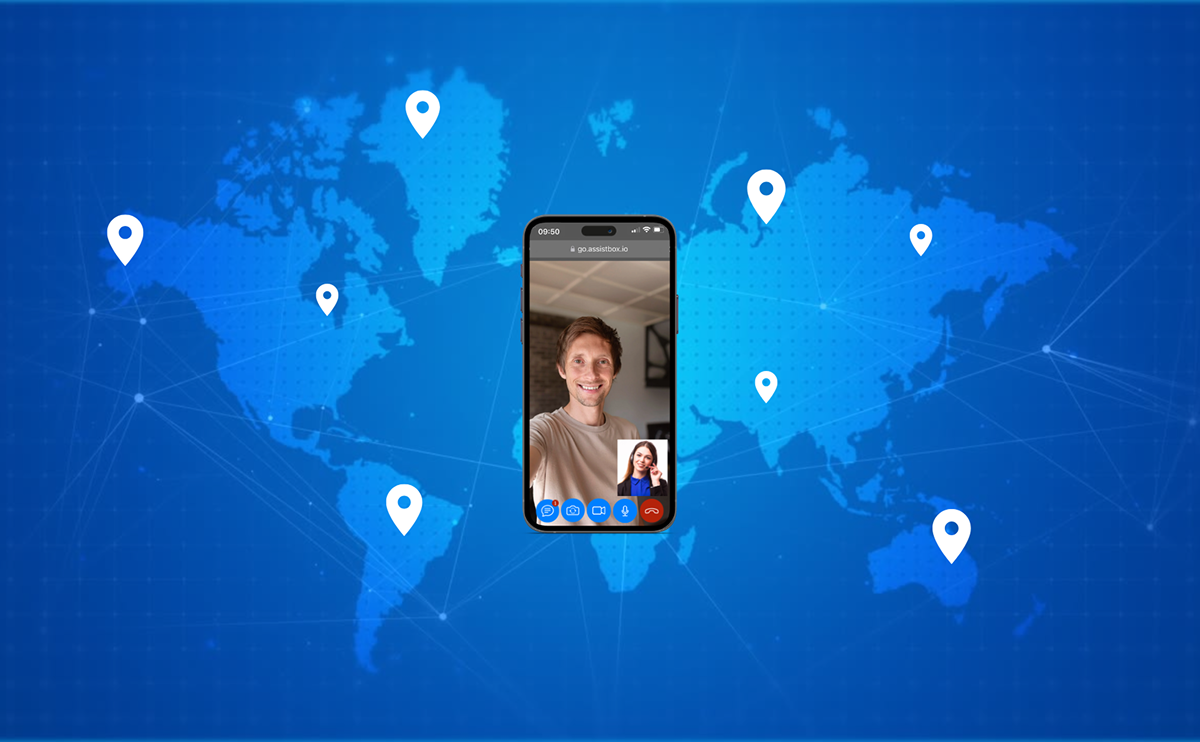
Video calling technology is no longer just a communication tool; it’s a core part of customer experience, operational efficiency, and digital transformation. Yet many organizations approach this decision with surface-level questions lacking technical depth:
“Something like FaceTime would be fine.”
“Does it have screen sharing?”
“Does it work on mobile?”
However, this decision directly impacts the foundation of your organization’s digital communication infrastructure. To choose a solution that truly meets your needs, you should carefully evaluate these 10 key areas:
1️⃣ Stability and Network Sensitivity
Weak internet, mobile data, corporate firewalls… the real world is far from perfect. Can the platform still perform seamlessly under these conditions?
🔍 Questions to Ask:
-
- How does the platform perform at low bandwidths?
- Is there automatic reconnection when a connection drops?
- Are special configurations needed for corporate networks?
- Can you test the platform under poor network conditions?
✅ A platform that looks robust on paper may fail for the weakest link in the chain — stability is the invisible backbone of your solution.
2️⃣ Scalability: What If You Have 5,000 Calls Tomorrow Instead of 50?
A solution that works in small pilot projects might struggle with thousands of simultaneous sessions. Is the system ready to grow with your needs?
🔍 Questions to Ask:
-
- Do you have references for large-scale usage in production?
- Can we run concurrent user stress tests?
- Is scalability handled via cloud or on-premise?
- Does the system support multi-tenant environments?
✅ Don’t evaluate your system based on today’s load — choose one that’s ready for tomorrow’s scale.
3️⃣ Integration Flexibility: How Well Does It Talk to Other Systems?
A video calling system is not an island. It should integrate seamlessly with CRM, appointment scheduling, contact centers, and more.
🔍 Questions to Ask:
-
- Do you support APIs, webhooks, and SDKs?
- Can you share real-world integration examples with CRMs or internal tools?
- Is SSO, LDAP, or other identity systems supported?
✅ A video solution adds true value when it becomes part of a broader digital ecosystem — integration is the key to long-term fit.
4️⃣ User Experience and Advanced Features
A strong user experience = fewer support tickets and higher satisfaction.
🔍 Questions to Ask:
-
- Is the interface consistent across mobile and desktop?
- What additional features do you offer (e.g., role-based access, virtual backgrounds, PiP, screen sharing)?
- Can you customize interfaces for different user roles?
✅ Even the most powerful platform will be rejected if it’s hard to use — adoption starts with ease of use.
5️⃣ 🎥 Recording and Reporting Capabilities
Recording isn’t just a nice-to-have — in many industries, it’s a legal requirement. But what matters is having a secure, uninterrupted, and auditable recording infrastructure.
Some platforms rely on client-side recording, meaning if a user’s (e.g. agent’s) connection drops, the recording may be lost. That kind of data loss is unacceptable in enterprise environments.
🔍 Questions to Ask:
-
- Is recording handled server-side?
- Are recordings preserved even if a session is interrupted?
- Are recordings encrypted? What are your storage policies?
- Is session logging, reporting, and access control available in detail?
- Can recordings be stored on-premise, or only in the cloud?
✅ A strong recording system ensures not just the quality of the call — but its continuity and compliance.
6️⃣ 🔐 Security, Access Control & Regulatory Compliance
Data security isn’t just IT’s job — it’s the responsibility of the whole organization.
🔍 Questions to Ask:
-
- Is your infrastructure compliant with data protection laws (GDPR, etc.)?
- Can you define role-based access control?
- Can your system be audited by internal IT/security teams?
- Do you offer secure backup and disaster recovery options?
✅ True enterprise security is built not just on promises, but on verifiable, auditable systems.
7️⃣ 💻 Developer Access and Customizability
No two organizations are the same. Your video platform should be adaptable and developer-friendly.
🔍 Questions to Ask:
-
- Do you offer comprehensive developer documentation?
- Is the UI customizable?
- How flexible is your integration with third-party systems?
✅ The most valuable platforms aren’t locked-in; they evolve with your needs — not against them.
8️⃣ 🤝 Real Support, Real Partnership
Support isn’t just tickets and emails. In critical situations, you need a partner who takes responsibility and walks the road with you.
🔍 Questions to Ask:
-
- Do you provide SLA-backed support?
- What is your average response time?
- In critical incidents, do you take ownership and lead resolution?
✅ Technical support is not a task — it’s a mindset. In tough moments, the team behind the tool becomes more valuable than the tool itself.
9️⃣ 🧪 The Details Only Real-World Use Reveals
Everything looks good in a demo — but the real test happens in the field.
🔍 What to Do:
-
- Run tests under real conditions: weak internet, mobile devices, older browsers.
- Review the quality of actual recorded sessions.
- See how it handles scale — try with 100+ participants if needed.
✅ Real-world performance tells a more honest story than any product promise — test, observe, and decide based on experience.
📣 Reference Validation: The Most Reliable Insight
The best way to learn about a platform is by talking to those who use it in the field. Vendor-selected reference stories are helpful but often curated.
🔍 What to Do:
-
- Don’t just speak to vendors’ handpicked references — request to contact clients of your choice.
- Ask openly about system stability, support quality, integration ease, and user satisfaction.
- Get a variety of perspectives, including different industries or use cases.
✅ Insights from actual users are worth more than any polished product presentation.
🔟 Adaptability & Future-Readiness
A platform that only meets today’s needs will quickly fall behind tomorrow. Is your solution modular, scalable, and future-proof?
🔍 Questions to Ask:
-
- Is the platform modular and extensible?
- Can it scale or adapt when new business needs emerge?
- Can it be reused across multiple internal projects?
✅ Flexible systems give you more than just a solution for today — they give your organization long-term confidence.
✅ This Is Not a Tool — It’s a Strategic Decision
Choosing the right video calling solution is not just a technical decision — it’s a strategic move. Consider not only the current use case, but also the long-term scalability, integration, usability, security, and sustainability of your choice.
🗣 If you’re currently in the selection process, build your checklist using these 10 areas.
Because “does it have video?” is only the beginning.


Mobile App
Safe with us
We pride ourselves on our commitment to your security.
That’s why we’re ISO 27001 certified. Our architecture is enterprise-grade scalable and we ensure strong adherence to all key DPA and GDPR requirements.